
Currency in Thailand
The official currency of Thailand is the Thai Baht (THB). Thai banknotes and coins are the standard legal tender used for everyday payments across the country.
For most travelers, the practical question is not which currency to use, but how to manage cash, cards, and withdrawals efficiently during the trip. In many parts of Thailand, especially outside large malls, chain businesses, and higher-end hotels, cash still plays an important role in day-to-day spending.
Street food stalls, local markets, small cafés, transport services, and independent shops may be cash-only, so having Thai Baht available is still important even if you plan to use your card whenever possible.
Using Credit Cards in Thailand
Credit cards are widely used in Thailand, especially at hotels, shopping malls, larger restaurants, convenience-focused tourist businesses, and established retail chains. They are often the easiest option for bigger purchases and more formal travel expenses.
Visa and Mastercard are generally the most commonly accepted international card networks. Acceptance can still vary by merchant, and some businesses may apply their own minimum-spend rules or card surcharges.
For that reason, it is best to treat card payments as a useful tool rather than your only payment method. Many smaller businesses still work more smoothly with cash.
ATMs and Cash Withdrawals
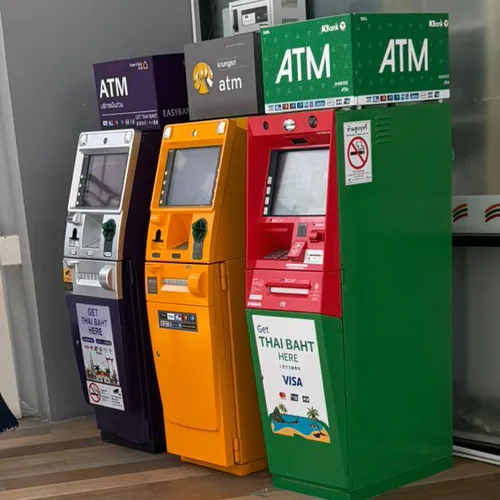
ATMs are easy to find in Thailand, including at airports, shopping areas, city centers, convenience locations, and major tourist destinations. International debit and credit cards can often be used to withdraw Thai Baht directly.
Thai ATMs commonly show a withdrawal fee on screen before you confirm the transaction, while your home bank or card issuer may also apply separate charges or exchange-rate markups.
Because fees can add up, many travelers prefer to make fewer, larger withdrawals instead of many small ones. It is also worth checking whether your bank refunds foreign ATM fees or charges extra for overseas cash access.
Cash Exchange in Thailand
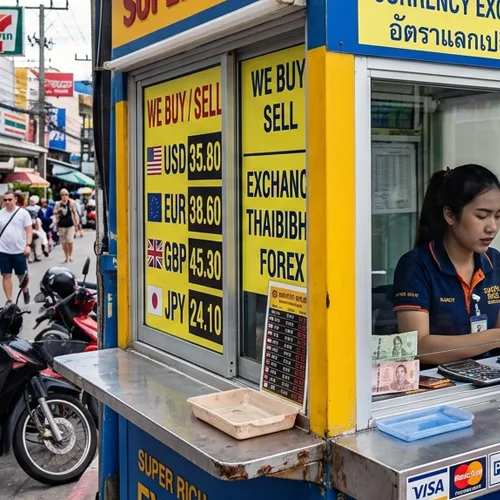
Money exchange in Thailand is available at airports, banks, licensed exchange counters, and many tourist areas. Rates can vary depending on location, provider, and timing, so comparing a few options can make a noticeable difference.
Airport exchange counters are convenient, but travelers often compare rates with city exchange booths before changing larger amounts. Exchanging only what you need immediately and reviewing rates carefully is often a more efficient approach.
Before handing over cash, always confirm the displayed rate, count the Thai Baht you receive, and keep the receipt in case you need it later.
Cash vs Card - What Works Best?
For most visitors, the best approach is a mix of cash and card. Cards are useful for hotels, shopping malls, and larger payments, while cash remains important for local transport, markets, tips, small food purchases, and many everyday situations.
If you want to avoid payment problems, carry enough Thai Baht for routine spending while keeping a card available for bigger expenses and backups. That balance is usually the simplest and most practical way to pay in Thailand.
How to Manage Money Exchange in Thailand
Managing money exchange in Thailand is usually straightforward once you understand when to use cash, ATMs, and card payments during your trip.
Many travelers use a combination of ATM withdrawals, card payments for larger expenses, and cash for transport, markets, smaller shops, and everyday purchases.
Using a balanced mix of payment methods can make spending in Thailand more practical while helping you stay prepared in places where card acceptance may be limited.
